
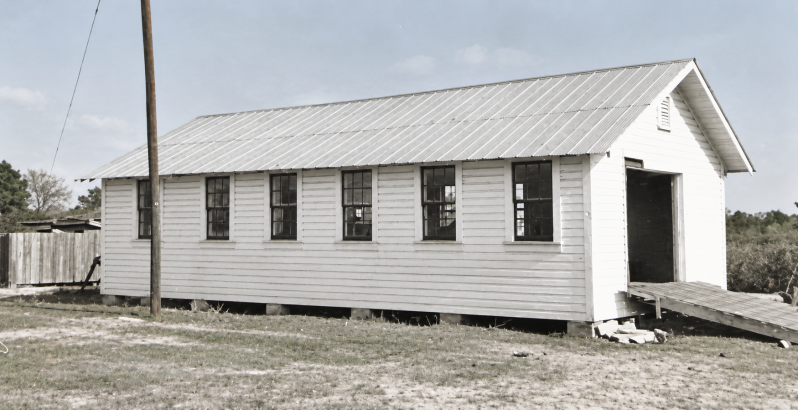
Loris Training School
Origins & Purpose
- Established in 1928, it was the first educational facility for Black students in Loris and surrounding communities, built under the Rosenwald program—a match‑funded initiative led by Julius Rosenwald and Booker T. Washington to improve schooling for African Americans across the rural South en.wikipedia.org+10greenbookofsc.com+10oceanfrontvac.com+10.
- Originally constructed with a six-month academic term for grades 1–7, it expanded over time—adding grades 8–11 and securing a full nine-month school year, largely due to the efforts of Principal William P. Johnson, Sr. (served 1931–1941) and George C. Cooper (principal 1941–1955) oceanfrontvac.com.
Funding & Architecture
- As a Rosenwald-funded school, it required matching contributions: local Black families, public agencies, and philanthropists all played a part. It’s estimated the total cost for its construction was around $4,700 greenbookofsc.com+11oceanfrontvac.com+11wilsonconsultingservices.net+11.
- Typical of Rosenwald designs, the Loris Training School likely featured large windows, modest wood-frame construction, and purposeful layout—built to maximize light, ventilation, and a practical learning environment consistent with standard plans from Tuskegee Institute scdah.sc.gov+8hmdb.org+8wilsonconsultingservices.net+8.
🎓 Educational Impact & Legacy
- Under George C. Cooper’s leadership, the school developed fully into a high school-level training school, consistently serving local Black youths until its closure in 1955, when students were moved to Finklea Consolidated High School wilsonconsultingservices.net+4greenbookofsc.com+4oceanfrontvac.com+4.
- The original Finklea school continued under Cooper’s administration until desegregation in 1970 greenbookofsc.com+1oceanfrontvac.com+1.
🏛️ Preservation & Commemoration
- In 2008, the Finklea High/Loris Training Schools Alumni Association successfully lobbied for a historical marker, located at the intersection of Cedar and Lewis Streets in Loris, to honor the school's legacy carolana.com+6greenbookofsc.com+6oceanfrontvac.com+6.
- Today, alumni efforts preserve the site not only as a memorial to early Black education but also as a continuing community center—offering youth programs, adult education, and cultural events.
🎯 Significance
- Part of a network of over 5,000 Rosenwald Schools constructed between 1917–1932, the Loris Training School reflects a transformative investment in African American education in a time of systemic underfunding under Jim Crow. Rosenwald Schools measurably improved literacy, academic achievement, and long-term opportunities for generations en.wikipedia.org+1scdah.sc.gov+1.
✍️ In Summary
The Loris Training School emerged as a beacon of education and empowerment for Black students in the early 20th century, guided by visionary leadership and community collaboration. Though it ceased operations in 1955, its legacy has endured—preserved by alumni, marked for posterity, and celebrated as part of the broader Rosenwald School movement.